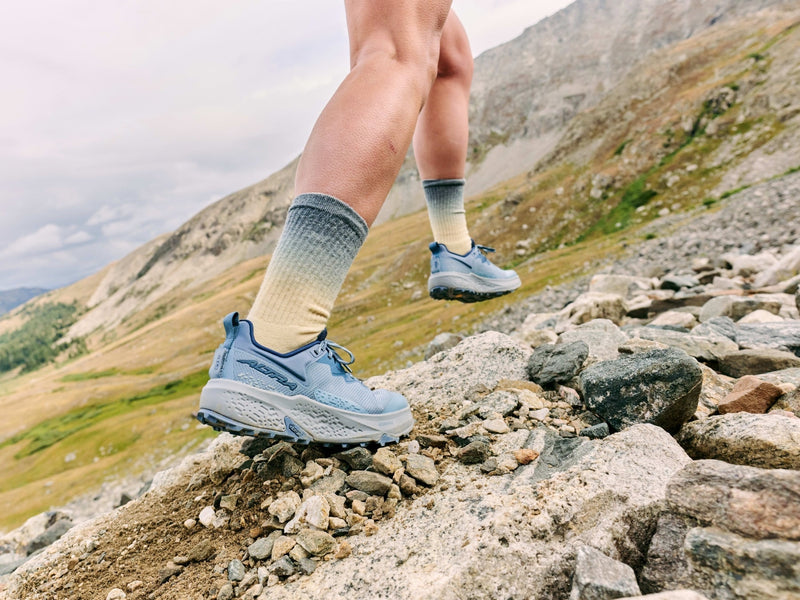


- Tag: Shoe Guides
Trail Running Shoe Parts Explained
What Are the Parts of a Shoe Used for Trail Running?
People think of road racing shoes having a lot of technology and expertise behind them. The same goes for a trail running shoe. Each element, from design to materials to structure, is fine-tuned for the terrain that you run on. Trail shoes need to protect you, and they need to be comfortable.
While you’re shopping for trail running shoes for men and trail shoes for women, it helps to know the parts of a shoe. That way, when you read the product description and try to compare, you know what’s being talked about. So let’s break it down part by part. Adapted from RIDC’s Opening the Path to Trail Running Toolkit.

1) The Outsole: Traction That Grips
Your first contact with the ground is the outsole. In many ways, this is the most important part of the shoe. It's the layer underfoot that treads rocks, paths, trunks, and bridges while you run your trails.
If you see the world “lugs,” those are the indents on the outsole that create edges for your feet to use for grip. Some shoe makers add sticky elements. Others use tough rubber materials that are also lightweight.
Altra’s MaxTrac™ outsole technology can be found on the classic Lone Peak Family trail runners. We also partner with Vibram® for a Megagrip outsole on the Lone Peak 9+ models. Now try to tell us we’re not taking grip seriously.
2) The Midsole: Cushion Meets Control
If the outsole is where your shoe hits the ground, the midsole is where your foot hits the shoe. This part of a shoe is a cushion between your feet and the ground. Some shoes have a standard midsole, while high cushion and low cushion running shoes provide additional padding or a little less than usual.
When you have more support underfoot, you may sustain comfort for longer into your run, which can help performance. But shoes with more padding might be heavier, which can potentially slow you down. Low cushion shoes won’t absorb as much impact for you, but they could help with a more natural stride and overall strength.
The midsole also tends to raise your heel slightly, but this depends on the shoe. Zero drop shoes are dead flat through the midsole, and they can be better for total foot and stride health.
3) The Upper: Built to Breathe and Protect
Uppers are the outer layer parts of a running shoe that protect the top of your foot. These are usually made of a type of mesh, and trail running uppers can be tighter-built to better keep out water and dirt. Good shoe uppers fit snugly over your foot but still allow for breathability. They also need to be durable.
4) The Fit: FootShape™ Freedom
Altra running shoes are made with one special element that’s hard to find: a roomy toe box that doesn’t compress your feet. Not to be overlooked, these shoe parts determine one of the most important levels of comfort for your feet. Most running shoes scrunch your toes into a narrow box, but not ours. We only make wide toe box shoes that facilitate what we call our natural fit philosophy.
The philosophy is simple. When your feet can spread the way they were meant to, everything else falls into place. Your natural stride can thrive, you may build more complete strength in your ankles, calves, and shins, you can be comfortable for longer while running, and you may lower your injury risk. That’s why so many podiatrist recommended shoes are made by Altra.
You can get wide shoes to go with your wide toe box shoes from Altra.

Fit and Feel: What It Means for Your Run
All the parts of a shoe by Altra come with a complete design that prioritizes your natural movement. It starts with our FootShape™ toe box, which allows your feet room to spread the way they’re supposed to and run in your natural stride. We’ve also got Zero-to-Low Drop construction in the heels of almost all of our shoes, which helps with alignment and balance along with long-term strength and running health.
Find the best shoe for you with our Shoe Finder tool.